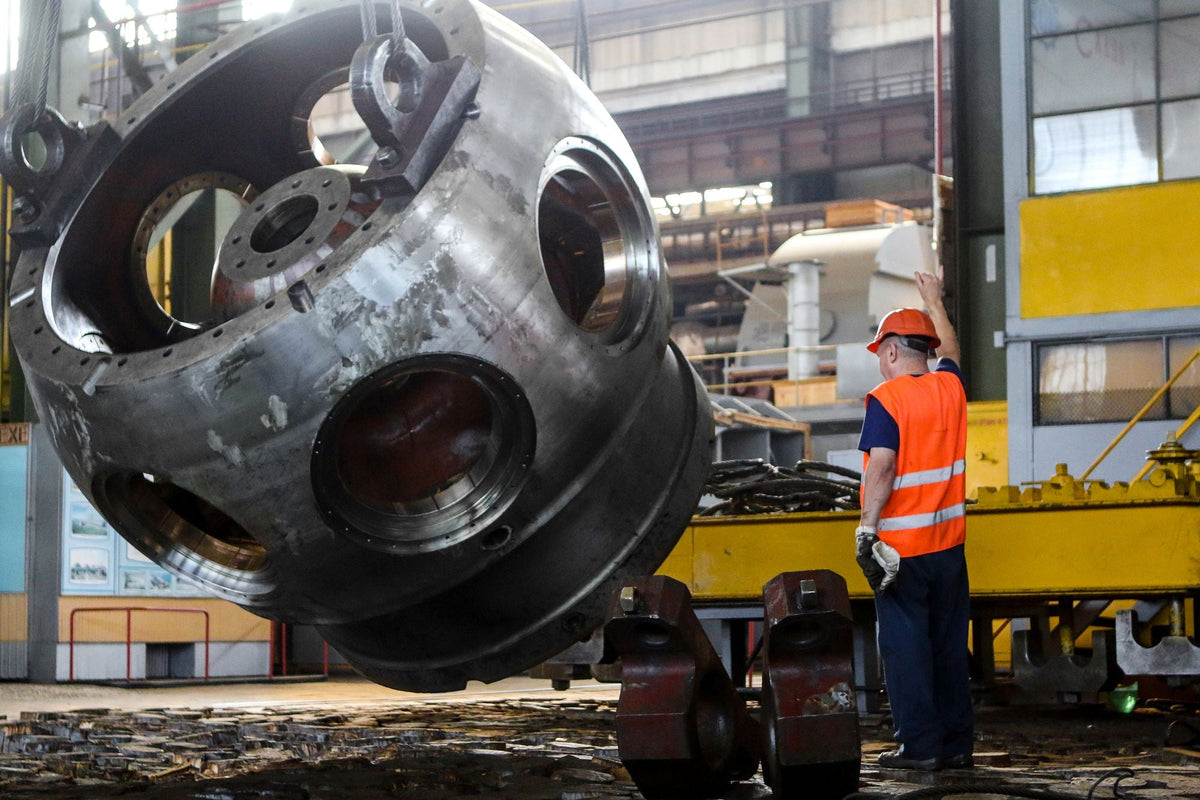
Load skates, also called machinery skates, are low, heavy-duty bodies that run on a set of small load wheels. You jack the machine up a little, slide the skates under its base or frame, lower it back down and roll it. It's how a lathe, a press or a heavy cabinet gets moved in a workshop without an overhead crane.
How many skates?
Three or four is normal. A common setup is a steerable skate at the front, guided with a handle, and two fixed skates under the back. Put each skate under a strong point of the frame and spread the weight as evenly as you can.
Check how a rating works before you add up capacity. On our CTA skates it's for the whole set, not each skate. Whatever you use, keep the machine's total weight comfortably inside the rating.
Our skates side by side
| Skate | Rating | Height | Wheels | Weight |
|---|---|---|---|---|
| 3 tonne set with handle | 3 t | 108 mm | Four | 14 kg |
| 6 tonne low profile | 6 t | 101 mm | Six | 13.8 kg |
| 6 tonne rubber top (CTA4) | 6 t set | 110 mm | Four | 16 kg each |
| 8 tonne rubber top (CTA6) | 8 t set | 110 mm | Six | 23 kg each |
| 12 tonne | 12 t | 145 mm | Eight | 40 kg each |
Measure the gap under the machine
Skate height decides whether a skate fits at all, so measure the clearance under the base, or how far you can safely jack it. The 6 tonne low-profile skate is the lowest at 101 mm. The 12 tonne skate is the tallest at 145 mm, so allow for it when you jack the machine.
Steering
Pushing a machine in a straight line is the easy part. Turning a corner and lining it up in its final spot is where a handle helps. The CTA steering handle fits the CTA4 and CTA6 skates and goes on the leading skate. The 3 tonne set comes with its own handle.
The floor and the route
- Skates roll best on smooth, sealed concrete. Cracks, joins and debris all add resistance, so walk the route and sweep it before you start.
- Stick to level ground. If there's any slope, work out how you'll hold the load back before you begin.
- Rubber tops, on the CTA skates and the 12 tonne skate, grip the load and protect paintwork.
- Move slowly and keep people clear of the sides of the load.
Lighter loads
For cabinets, shelving and machines up to 1,800 kg, the hydraulic furniture mover can be simpler. It lifts the load up to 250 mm with a foot pedal, holds it with straps at each end and rolls it into place.
Tell us the machine's weight, the size of its base and the clearance underneath, and we'll suggest a set. Call 0447 341 967 or browse all load skates.